Gibsons Road East Occurrence (Titanite Hill)
The Gibson's Road Occurrence is a great place for beginner rockhounds to get a feel for digging in Highlands East. More experienced collectors will also be thrilled to find extraordinary examples of many of classic mineral species that have made this area famous.
The main collecting area is clearly defined and mineralization occurs close to the surface so there should be little difficulty in finding good specimens - even just by sifting through what others have left behind!
Mineral types
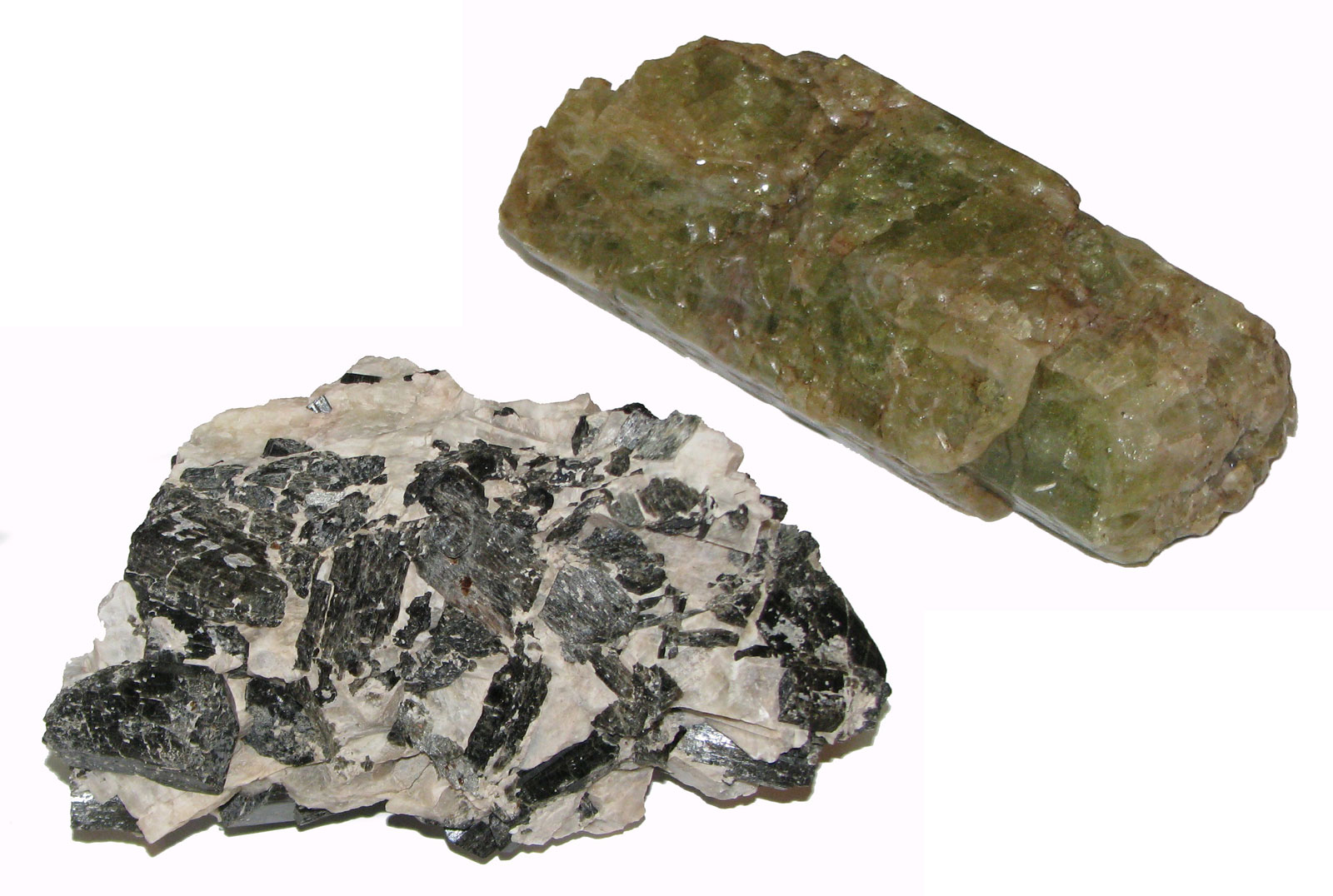
Minerals you can find in weathered calcite veins cutting gneiss and amphibolite:
- calcite
- large crystals of gem green apatite
- buff coloured feldspar,
- lustrous brown titanite
- black fluororichterite
- microcline
- biotite mica
Numerous similar occurrences in the Tory Hill area have been worked over the past hundred years for phosphate (apatite) for use in fertilizer, and for mineral specimens - which have found their way into major collections all over the world and made the area famous. This location was just discovered a few years ago so there is still potential for exciting new discoveries.
Directions
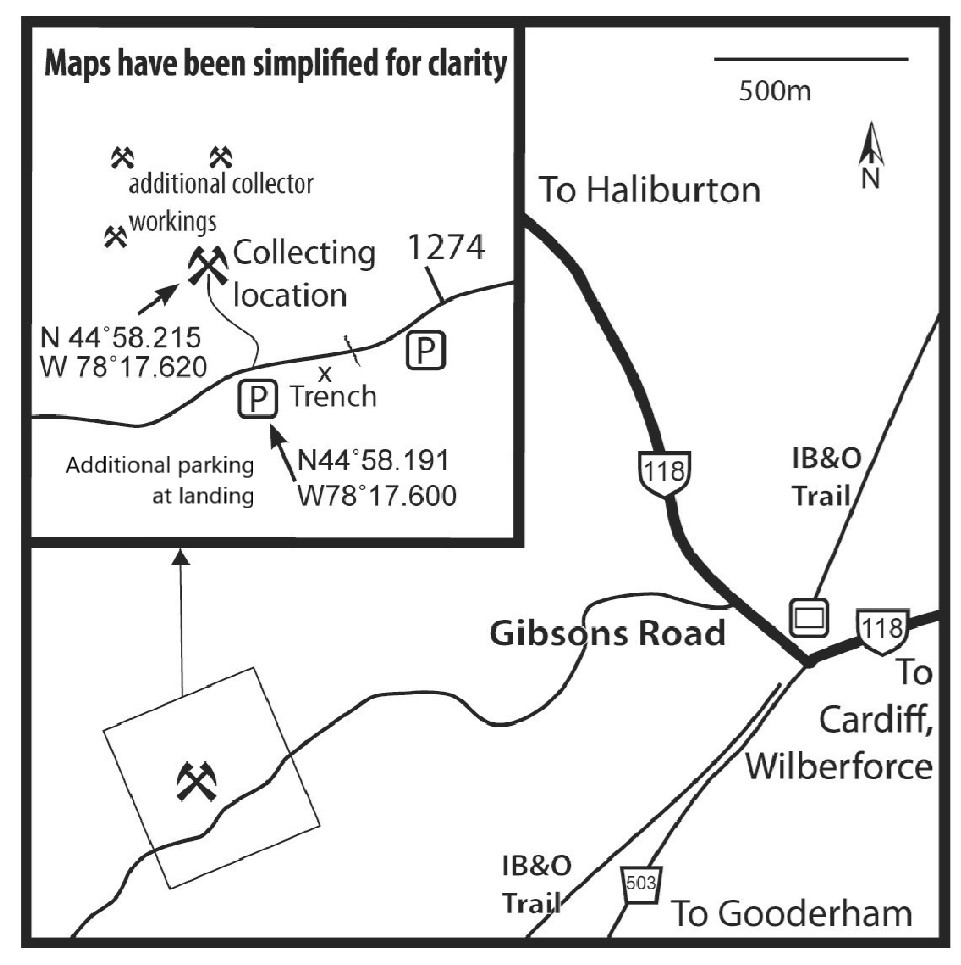
From the intersection of Highway 118 and County Road 503 turn north on Highway 118 for 200 metres to Gibson’s Road. At the end of Gibson’s Road, an unassumed road (trail) begins. You can park here or if you have a high clearance vehicle you can continue driving. Park at the side of the road where there is room to let other vehicles by (past #1274) or keep going to the vehicle landing area where there is space for a few vehicles to park.
Pits and trenches on the left are part of the Millar Apatite Mine workings. Cross the trail, over a small ridge, through a low swampy area and then up the hill to the main collector workings.
Look for elongated depressions in the earth surrounding the main exposure that could indicate the presence of a weathered calcite vein. Dig through the organic material and glacial debris that accumulates in these depressions until you start to see sticky brown soil with bits of calcite or crystals. Take it slow from here and work by hand to avoid damaging crystal specimens. At one time, these cracks in the surrounding rock were completely filled with solid calcite, but over time, the calcite has dissolved away leaving crystals of the other, more resistant minerals ‘floating’ in the dirt. Some of the solid calcite also remains and may contain crystals “in matrix”. The best strategy, especially for beginners, is usually to start where it is clear someone else has had some success and continue from there.
Know the risks
Mineral collecting can be a safe and fun experience for the whole family, but it is your responsibility to assess the risks for you, anyone accompanying you, and take appropriate steps to avoid them. Following any of the instructions or partaking in any activity described here is entirely at your own risk.